SUS-SOIL is a 4-year project that is funded by the European Union’s Horizon Europe Research and Innovation Project that caters for sustainable soil and subsoil Health.
The project consortium consists of 23 partners from 13 countries across Europe and North Africa, including Heliopolis University for Sustainable Development, with the University of Santiago de Compostela (USC) from Spain as the project coordinator, 20 partners as beneficiaries and 2 partners as associated partners.
The project focuses on the development of 15 Subsoil-Living Labs to inventory, analyse and benchmark different agroecology subsoil management (ASM) and land uses, studying their impacts on the subsoil spatial variations and dynamics to best combine ASM practices in rural and urban areas within a global regional context.
The 15 Living Labs are located in diverse biographic regions across the globe as follows:
Boreal, Atlantic, Continental, Mediterranean, Alpine and Pannonian Regions
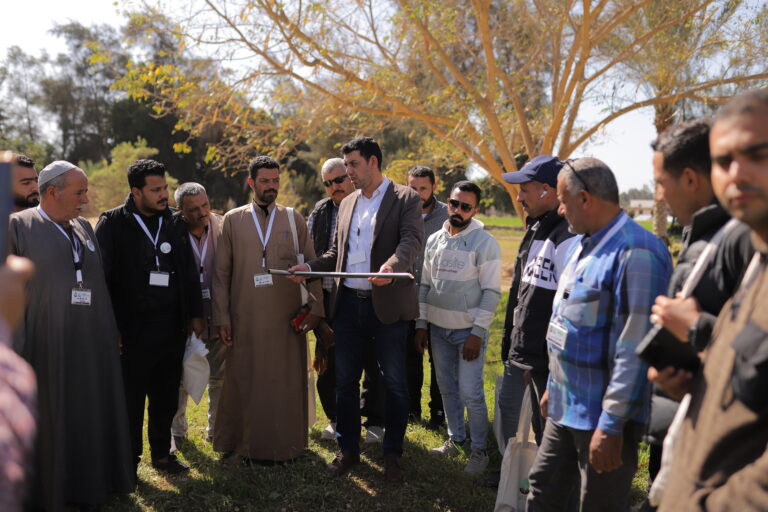
Egypt’s Living Lab is located in Sekem Farm in Sharkia Governorate and is managed by the faculty of Organic Agriculture team.
The project expected outcomes include:
- To develop a subsoil/soil monitoring database able to interoperate with the LUCAS and ESDAC databases
- To analyze long term agroecology subsoil management-ASM landuse and management of 3 relevant types of soil per Living Lab and the relationship with rural and urban ecosystem services delivery including modeling
- To develop a set of farm idiotypes per Living Lab mixing the ASM best practices as an alternative to conventional systems to enhance the ecosystem services provision at regional level for citizens
- To create a Subsoil Decision Support Tool (S-DST) considering soil degradation and relevant business models
- To propose a subsoil policy strategy framework to foster ASM best practices
Learn more about the project through the official website here
This project has received funding from the European Union’s Horizon Europe research and innovation programme.