Table of Contents
- Introduction
- Performance & Progress
- Waste Characterization Study
- Current Processes
- Recycling Initiatives
- Community Engagement in the 13 Villages
- Targets
- Conclusion
1. Introduction
Heliopolis University for Sustainable Development places sustainability at the heart of its vision, aiming to pioneer transformative change through education, research, and community engagement. Waste management is one of the most visible and impactful aspects of our sustainability journey. Aligned with Sustainable Development Goal 12: Responsible Consumption and Production, the university is committed to reducing waste generation through prevention, reduction, recycling, and reuse.
Our waste management activities are integrated within the wider framework of community development initiatives in 13 villages surrounding SEKEM, ensuring that both campus and community benefit from sustainable waste practices. This report presents the Heliopolis University Waste Management data for 2025, outlines our ongoing initiatives, and sets our targets for continued improvement.
2. Performance & Progress
In 2024, Heliopolis University generated a total of 32,860 kg of waste, of which:
- 23,260 kg (70.8%) was recycled,
- 9,600 kg (29.2%) was sent to landfill.
This represents a significant recycling achievement, reflecting the commitment of our students, faculty, and operational teams toward sustainable practices.
| Category | Amount (kg) |
|---|---|
| Total Waste Generated | 32,860 |
| Waste Recycled | 23,260 |
| Waste Sent to Landfill | 9,600 |
3. Waste Characterization Study
In 2025, Heliopolis University conducted a detailed waste characterization analysis as part of its monitoring system for the 13-village program. The data provides valuable insight into the nature and sources of waste.
| Material | Quantity (kg) |
|---|---|
| Glass | 135 |
| Cardboard | 5,047 |
| Cans | 58 |
| Plastic Bags | 531.5 |
| Crystal | 1,187.5 |
| High Plastic | 1,220 |
| Compost | 300 |
| Mixed Waste | 14,781 |
| Trash (Landfill) | 9,600 |
Analysis
- Cardboard and plastics form a significant portion of recyclable materials, showing strong potential for further reduction through reuse initiatives.
- Compostable material (300 kg) highlights the opportunity to expand organic waste composting in collaboration with community schools.
- Mixed waste (14,781 kg) remains a challenge and indicates areas for improving sorting and awareness campaigns.
4. Current Processes
Heliopolis University follows a comprehensive waste management approach that integrates reduction, segregation, recycling, and responsible disposal.
- Collection & Sorting: Waste is collected daily from campus facilities and the 13 participating schools. It is sorted into recyclable, compostable, and landfill categories.
- Recycling: Materials such as paper, cardboard, glass, and plastics are separated and sent to partner recycling facilities.
- Composting: Organic waste is collected and converted into compost, which is reused in the SEKEM farms to support sustainable agriculture.
- Landfill: Only non-recyclable waste is transferred to local landfill sites.
These processes are managed under the supervision of the Rural Development Center and supported by trained staff and student volunteers.
5. Recycling Initiatives
In 2025, several initiatives were launched to strengthen waste reduction and recycling:
- Waste Awareness Campaigns: Conducted in collaboration with schools and youth clubs to promote waste segregation.
- Community Recycling Stations: Set up across the 13 villages for collection of glass, cans, and plastics.
- Composting Workshops: Trained students and farmers on turning organic waste into fertilizer.
These actions have helped cultivate a culture of environmental responsibility among students and the surrounding community.
6. Community Engagement in the 13 Villages
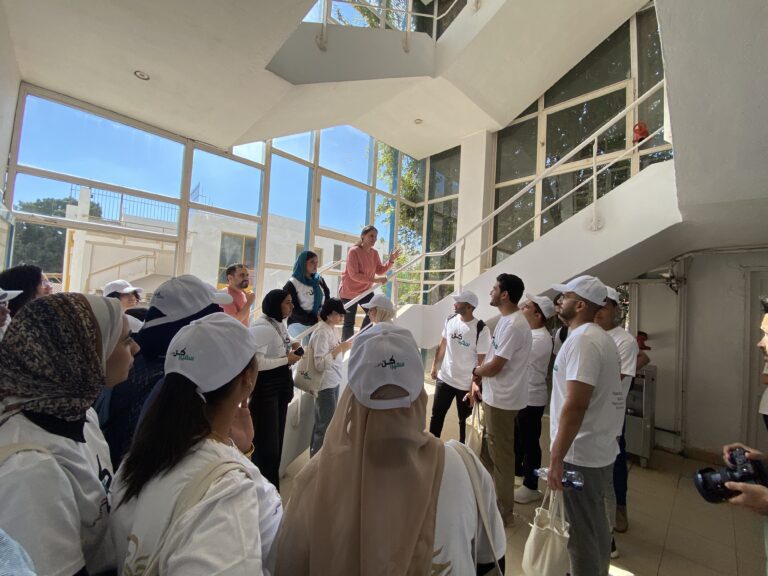
Heliopolis University’s commitment extends beyond its campus. Through the Community Service Program, students and staff engage directly with local schools and residents to enhance sustainable waste management practices.
Key achievements include:
- Equipping 13 schools with waste segregation bins and awareness materials.
- Collecting and recycling over 23 tons of waste in collaboration with village councils.
- Organizing environmental education sessions on waste sorting, recycling, and composting.
- Employing and training local collectors, creating new green jobs in rural areas.
This program demonstrates how education, sustainability, and community development can work hand in hand toward a cleaner and more responsible society.
7. Targets
Heliopolis University is committed to continuous improvement. For 2026, the university has established the following targets:
| Target | Description |
|---|---|
| Increase Recycling Rate to 75% | Strengthen sorting systems and awareness to achieve higher recycling efficiency. |
| Reduce Total Waste by 10% | Implement reduction campaigns across campus and schools. |
| Expand Composting by 50% | Establish new composting units in five schools. |
| Introduce E-waste Collection Points | Launch an initiative to collect and recycle electronic waste safely. |
| Engage 1,000 Students in Waste Awareness Activities | Integrate sustainability learning within community service curricula. |
8. Conclusion
Heliopolis University’s Waste Management Report 2024 highlights meaningful progress in achieving sustainable waste practices aligned with SDG 12. The combination of education, innovation, and community engagement has produced a measurable impact both on campus and in the surrounding villages.
By maintaining its focus on responsible consumption, recycling, and waste reduction, the university reaffirms its position as a leading institution in sustainable development and a strong candidate for global recognition in the Times Higher Education Impact Rankings.